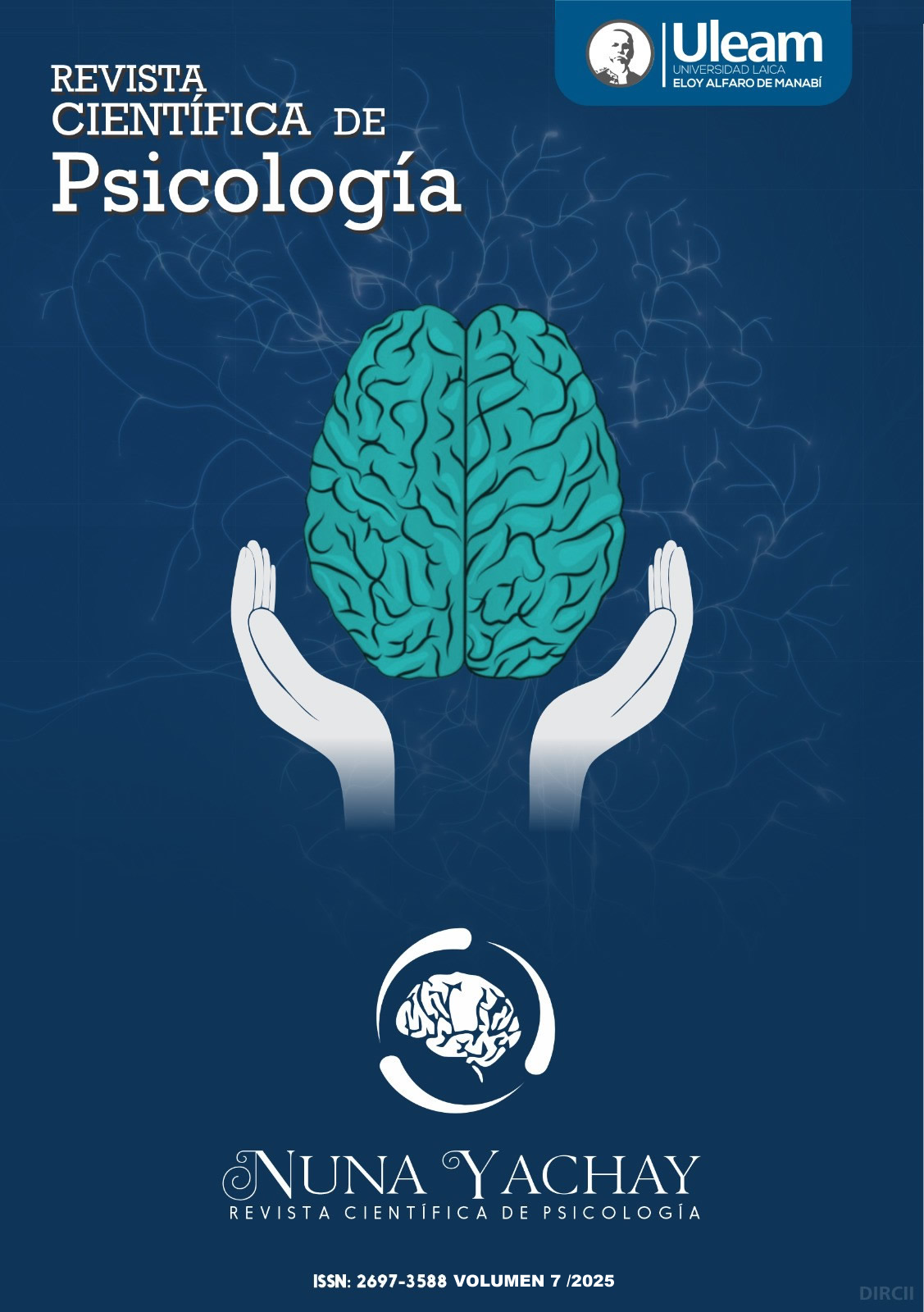
Effectiveness of CBT in adults with substance use disorders: Systematic review
DOI:
https://doi.org/10.56124/nuna-yachay.v7i14.024Keywords:
substance use, cognitive behavioral therapy, adultsAbstract
The aim of the research was to determine the effectiveness of cognitive behavioral therapy in the treatment of substance use disorders in adults. The results were obtained through an exhaustive search of the PubMed/MEDLINE and Scopus databases, applying rigorous inclusion and exclusion criteria (randomized controlled trials and quasi-experimental trials published in the last five years). The main findings of the studies analyzed highlight that CBT is remarkably effective in treating these disorders in individual and group settings, as well as in outpatient and inpatient environments. It was found to contribute significantly to reducing withdrawal symptoms, improving coping skills, and, most importantly, decreasing the relapse rate; results that consolidate CBT as a precise and adaptable therapeutic approach for the adult population with substance use disorders
Downloads
References
Aonso-Diego, G. González-Roz, A. Krotter, A. García-Pérez, A. Secades-Villa, . (2021). Contingency management for smoking cessation among individuals with substance use disorders: In-treatment and post-treatment effects. Addict Behav, 119, 106920. 10.1016/j.addbeh.2021.106920
Benitez, B. F. (2023). The rise and fall of substance use during treatment: Applying recency and expectancy principles to daily substance use patterns. Psychology of addictive behaviors : journal of the Society of Psychologists in Addictive Behaviors, 37(2), 235–246. 10.1037/adb0000824
Coates, J. M. (2020). Craving mediates the effect of impulsivity on lapse-risk during alcohol use disorder treatment. Addictive behaviors, 105, 106286. 10.1016/j.addbeh.2019.106286
Hallgren, K. A. (2021). Optimizing the length and reliability of measures of mechanisms of change to support measurement-based care in alcohol use disorder treatment. Journal of consulting and clinical psychology, 89(4), 277–287. 10.1037/ccp0000643
Harada, T. A. (2022). A 12-session relapse prevention program vs psychoeducation in the treatment of Japanese alcoholic patients: A randomized controlled trial. Neuropsychopharmacology reports, 42(2), 205–212. doi:10.1002/npr2.12248
Holzhauer, C. G. (2020). Mechanisms of change in female-specific and gender-neutral cognitive behavioral therapy for women with alcohol use disorder. Journal of consulting and clinical psychology, 88(6), 541–553. 10.1037/ccp0000492
Johansson, M. B. (2021). Effects of Internet-Based Cognitive Behavioral Therapy for Harmful Alcohol Use and Alcohol Dependence as Self-help or With Therapist Guidance: Three-Armed Randomized Trial. Journal of medical Internet research, 23(11), e29666. 10.2196/29666
Kiluk, B. D. (2024). A Digital Cognitive Behavioral Therapy Program for Adults With Alcohol Use Disorder: A Randomized Clinical Trial. JAMA network open, 7(9), e2435205. 10.1001/jamanetworkopen.2024.35205
Kuhlemeier, A. D. (2021). Applying methods for personalized medicine to the treatment of alcohol use disorder. Journal of consulting and clinical psychology, 89(4), 288–300. 10.1037/ccp0000634
Litt, M. D. (2021). Momentary coping and marijuana use in treated adults: Exploring mechanisms of treatment. Journal of consulting and clinical psychology, 89(4), 264–276. 10.1037/ccp0000633
Medina, L., Prada, E. y Torrado, O. (2022). Consumo de sustancias psicoactivas en Latinoamérica desde el abordaje clínico en neurociencia en la última década: una revisión narrativa. Revista Eleuthera, 24(2), 83-96. 10.17151/eleu.2022.24.2.5
Papas, R. K. (2021). A randomized clinical trial of a group cognitive-behavioral therapy to reduce alcohol use among human immunodeficiency virus-infected outpatients in western Kenya. Addiction, 116(2), 305–318. 10.1111/add.15112
Peng, W. Z. (2022). Group cognitive behavioral therapy as an effective approach for patients with alcohol dependence: A perspective study. Medicine, 101(36), 1-4. 10.1097/MD.0000000000030459
Pfund, R. A. (2021). Dose of psychotherapy and long-term recovery outcomes: An examination of attendance patterns in alcohol use disorder treatment. Journal of consulting and clinical psychology, 89(12), 1026–1034. 10.1037/ccp0000703
Rawson, R. G. (2021). A randomized comparison of 4 vs. 16 weeks of psychosocial treatment for stimulant users. Journal of substance abuse treatment, 124, 108274. 10.1016/j.jsat.2020.108274
Silva, M. A.-N. (2020). Changes in DSM criteria following a culturally-adapted computerized CBT for Spanish-speaking individuals with substance use disorders. Journal of substance abuse treatment, 110, 42–48. 10.1016/j.jsat.2019.12.006
Srivastava, A. B.-P. (2021). Drinking reduction during cognitive behavioral therapy for alcohol use disorder is associated with a reduction in anterior insula-bed nucleus of the stria terminalis resting-state functional connectivity. Alcoholism, clinical and experimental research, 45(8), 1596–1606. 10.1111/acer.14661
Stephens, R. S. (2020). Treating cannabis use disorder: Exploring a treatment as needed model with 34-month follow-up. Journal of substance abuse treatment, 117, 108088. 10.1016/j.jsat.2020.108088
Published
How to Cite
Issue
Section
License
Copyright (c) 2025 Revista Científica y Arbitrada de Psicología NUNA YACHAY - ISSN: 2697-3588.

This work is licensed under a Creative Commons Attribution-NonCommercial-ShareAlike 4.0 International License.




3.jpg)